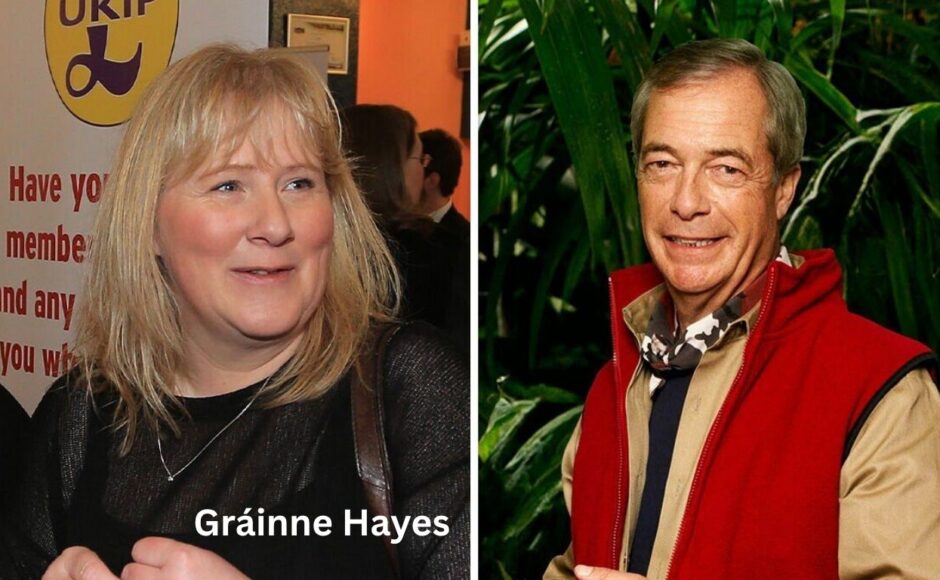
Nigel Farage has spent decades as one of Britain’s most recognisable political figures, but much less is known about the people who were part of his life before politics brought him into the national spotlight. One of those people is Gráinne Hayes, his first wife, who remained largely away from public attention despite sharing some of the most important moments of his early personal journey.
Unlike many people connected to public figures, Gráinne Hayes has never sought media attention or public recognition. She has chosen a private life, keeping details about her personal journey away from newspapers and interviews. However, the information that is publicly known reveals the story of an Irish nurse whose kindness, care, and support became connected with a defining period in Nigel Farage’s life.
Who Is Gráinne Hayes?
Gráinne Hayes is an Irish former nurse who became known publicly because of her marriage to Nigel Farage. While her name is often mentioned in connection with the former UKIP leader, she has always maintained a distance from politics and public life.
Her background is very different from that of many people associated with famous personalities. Rather than building a public career, Hayes focused on her profession, family, and personal life.
Quick Facts About Gráinne Hayes
| Detail | Information |
|---|---|
| Full Name | Gráinne Hayes |
| Nationality | Irish |
| Profession | Former nurse |
| Married Nigel Farage | 1988 |
| Children | Two sons, Samuel and Thomas |
| Divorce | 1997 |
| Public Presence | No verified interviews or official social media accounts |
The name Gráinne is a traditional Irish name, pronounced “Grawn-ya”, reflecting her Irish heritage.
Early Life and Nursing Career
Very little information is available about Gráinne Hayes’ childhood, education, or family background. She has always preferred to stay away from the public eye, and many details about her early years have never been made public.
What is known is that she worked as a nurse in the United Kingdom during the 1980s. During this period, many Irish healthcare professionals worked within the NHS, supporting hospitals across Britain and helping meet the growing demand for skilled medical staff.
It was through her nursing career that Hayes eventually met Nigel Farage, who at the time was working in the financial sector rather than politics.
Some reports have suggested that Hayes worked at or near Bromley Hospital in South London, although this detail has never been officially confirmed.
How Gráinne Hayes Met Nigel Farage
The beginning of their relationship came during a difficult chapter in Nigel Farage’s life.
In 1985, Farage was involved in a serious road accident near Orpington, Kent. The accident caused major injuries, including damage to his leg and head, and required a long period of treatment and recovery.
During this time, Gráinne Hayes was reportedly one of the nurses involved in his care. Farage later explained that he “married the nurse who treated me”, referring to Hayes.
Their relationship developed during his recovery period, when Farage was dealing with both physical injuries and the emotional challenges that followed the accident. For Hayes, the situation reflected the dedication and compassion expected from a healthcare professional supporting a patient during a difficult time.
Marriage and Family Life
After several years together, Gráinne Hayes and Nigel Farage married in 1988.
At that time, Farage was working as a commodities trader in London and had not yet entered the world of politics. The couple built a family together and welcomed two sons, Samuel and Thomas.
Their marriage covered an important period in Farage’s personal development. During these years, he recovered from serious health challenges, continued building his career, and later began moving towards political involvement.
Timeline of Important Events
1985: Nigel Farage suffers a serious road accident and meets Gráinne Hayes during his recovery.
1986: Farage receives treatment for testicular cancer.
1988: Gráinne Hayes and Nigel Farage marry.
1989: Their first son, Samuel, is born.
1991: Their second son, Thomas, is born.
1993: Farage joins UKIP and begins his political career.
1997: The couple divorce.
Their marriage lasted around nine years and included some of the most important changes in Farage’s personal and professional life.
A Relationship Built Around Support and Family
The story of Gráinne Hayes and Nigel Farage is not only about marriage but also about support during challenging times.
During their years together, Hayes was present during Farage’s recovery from serious injuries and illness. The couple raised two children while Farage’s career continued to develop.
As Farage became more involved in politics and public life, Hayes continued to remain outside the spotlight. Even after their divorce in 1997, she maintained her preference for privacy.
Her story shows how important roles are often played away from public attention. Not everyone connected to a famous person chooses recognition, and some people prefer to support their families quietly.
Public Interest and Limited Information
Because of her connection to Nigel Farage, Gráinne Hayes is occasionally mentioned in articles and biographies about him. However, verified information about her remains limited.
The details that are widely accepted include:
- She is Irish.
- She worked as a nurse in the UK.
- She married Nigel Farage in 1988.
- They have two sons together.
- They divorced in 1997.
Beyond these facts, there is very little confirmed information available. Respecting privacy is important, especially when discussing people who have never chosen a public career.
Her Link to Irish Healthcare History
Gráinne Hayes’ story also reflects a wider part of British healthcare history.
During the 1980s and 1990s, thousands of Irish nurses worked within the NHS, contributing greatly to hospitals and communities throughout Britain. Many healthcare professionals moved from Ireland to the UK to build careers and provide essential medical care.
In this wider context, Hayes represents part of a generation of Irish healthcare workers who played an important role in supporting Britain’s medical system.
Life Away From the Spotlight
Perhaps the most noticeable part of Gráinne Hayes’ story is her decision to remain private.
She has not given public interviews about her marriage, created a public profile, or used her connection to Nigel Farage for attention.
In today’s world, where the personal lives of public figures often become widely discussed, Hayes’ choice to maintain boundaries is unusual. She has continued to live away from headlines and focus on her own life.
Frequently Asked Questions
Who is Gráinne Hayes?
Gráinne Hayes is an Irish former nurse and the first wife of Nigel Farage. They married in 1988, had two sons, and divorced in 1997.
How did Gráinne Hayes meet Nigel Farage?
They reportedly met after Farage’s serious road accident in 1985 while Hayes was involved in his medical care.
Where is Gráinne Hayes now?
There is no confirmed public information about her current location or career. She has continued to live privately.
Did Gráinne Hayes remarry?
There is no publicly confirmed information about whether she remarried after her divorce from Farage.
Does Gráinne Hayes have a public profile?
No verified interviews or official social media accounts are linked to her.
Final Thoughts
Gráinne Hayes’ story is one of privacy, family, and quiet influence. While Nigel Farage became a well-known political figure whose career was followed closely by the public, Hayes chose a different path away from media attention.
Although their marriage ended in 1997, she remains an important part of Farage’s early personal history. Her story highlights the impact of support, compassion, and the role people can play behind the scenes.
The limited information available about Gráinne Hayes tells the story of a woman who valued family, dignity, and a private life over public recognition.