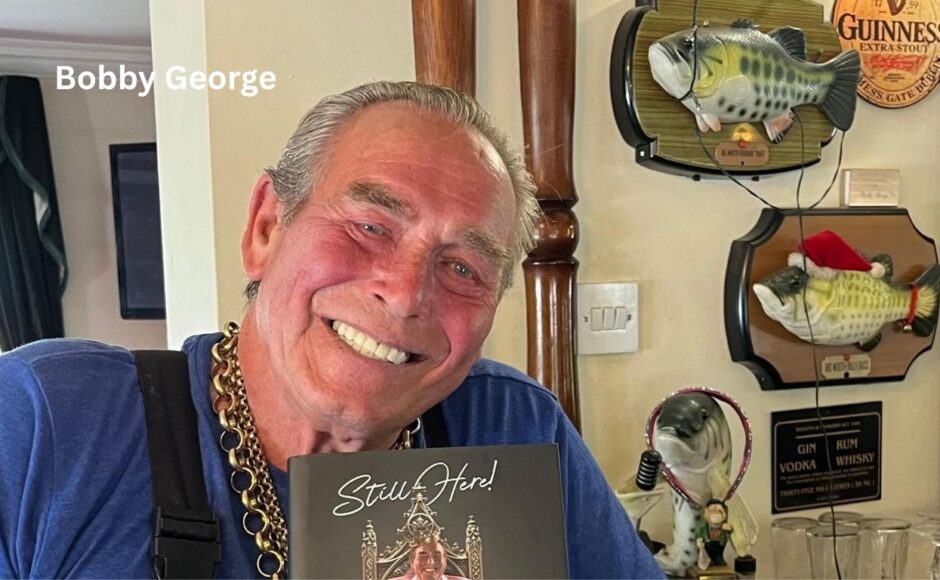
Bobby George never won a World Championship, but he accomplished something that few players ever do: he became one of the most recognisable figures in dart history. He became a sporting hero whose fame went well beyond the oche thanks to his distinctive gold jewels, lavish entrances, vibrant costumes and endearing smile.
Many admirers are still looking for Bobby George’s net worth because of his continuing reputation. They are interested in learning how a darts player from a time when prize money was relatively small managed to amass substantial income and keep his public image for decades.
In actuality, Bobby George has never disclosed his financial situation in public. His wealth is estimated by a number of internet sources to be between $1 million and $5 million, however official financial records do not corroborate these estimates. His entire career, which includes tournament revenues, television work, exhibition events, public appearances, real estate ventures, publishing, and his amazing ability to stay relevant long after retiring from elite play, provides a greater understanding of his total wealth.
Bobby George, Who Is He?
Bobby George, who was born Robert Francis George in London on December 16, 1945, is considered one of the best entertainers in sports history. He was a professional darts player, a television personality, a commentator, and an exhibition performer during his career.
George is affectionately referred to as “The King of Bling” because of his ostentatious fashion sense. George embraced glamour at a period when most darts players showed up on stage with nothing more than their darts and plain clothing. He soon became known for his extravagant entrances, glittering attire, gold jewels, and extravagant demeanour.
His reputation wasn’t based just on how he looked. George defeated some of the most formidable opponents of his period by making it to the BDO World Championship final twice, in 1980 and 1994. But what really set him apart from his contemporaries was his realisation that television viewers were interested in more than just athletic prowess. Early on, he recognised that personality might be just as important as performance.
He was able to enjoy a career that went far beyond competitive darts because to that knowledge. He became a well-known television personality, a reputable exhibition player, an after-dinner speaker, and a brand ambassador after leaving the professional circuit. Bobby George’s long-term financial success was largely shaped by these pursuits; tournament victories are simply one aspect of his fortune.
Early Years and Working-Class Origins
Bobby George had modest beginnings even before the dazzling lights of televised darts.
He was up in a working-class setting in post-war London, when sport, neighbourhood competitions, and local pubs were all important aspects of daily life. Before figuring out what he wanted to do for a living, George, like many others of his generation, chose practical trades over glamorous occupations.
He worked as a floor layer and builder before turning to professional darts, occupations that required hard effort, perseverance, and discipline. His uncomplicated demeanour and unwavering resolve, which eventually became his hallmark both on and off stage, were shaped in part by those events.
During his younger years, George also boxed. Many people think that his athletic background helped him develop the self-assurance, poise, and commanding stage presence that eventually made him one of the most captivating darts players.
Early in George’s career, professional darts had a completely different appearance. There were no million-pound competitions, sponsorship deals, or top academies. The majority of contests were held in pubs, clubs, county events, and local leagues, where players frequently had to work other jobs to make ends meet and prize money was somewhat small.
More than just talent was needed for success. Players needed to be self-assured, resilient, and capable of entertaining onlookers. Long before he became well-known, George was able to stand out from the crowd since he was born with such traits.
Developing Your Darts Career
Bobby George lacked access to professional development programs and organised coaching systems, in contrast to players of today.
Rather, he honed his abilities via years of practice, regional contests, and numerous games throughout the county circuit. He became well-known throughout British darts due to his steady rhythm, mental toughness, and self-assurance under duress.
George had made a reputation for himself among some of the biggest names in the sport by the late 1970s, including Eric Bristow, John Lowe, Jocky Wilson, and Leighton Rees. Every big tournament included world-class talent, and competition was intense.
It took more than just consistency to succeed in such a cutthroat time. George set himself apart with his performances as well as his distinct personality.
He made his debut by making it all the way to the final of the 1980 BDO World Championship. Eric Bristow, who was already proving to be one of the best players in the history of the sport, was waiting for him.
George’s career was changed by getting to the championship match, even if he lost in the final. He quickly rose to prominence as one of the most well-known dart players and built a reputation that would open doors for decades to come.
The 1980 World Championship: A Turning Point in My Career
Many athletes are known for the titles they have won.
There is another reason why Bobby George is remembered.
Even though he lost to Eric Bristow in the 1980 BDO World Championship Final, it is still regarded as one of the pivotal milestones of his career.
Bristow was starting a phase of dominance at the time that will influence professional darts for the rest of the decade. George’s status in the sport was instantly improved by competing with such a great athlete.
Because he provided viewers with much more than just results, George avoided the fate of several runners-up who eventually vanish into history. He gained sporting respect from the championship final, but it was his character that made him a long-lasting television darling.
His self-assured stride to the stage, vibrant appearance, and innate flair gave professional darts a new look. In addition to his skill, fans enjoyed the entertainment value he provided each time he competed.
In terms of money, the period was very different from contemporary professional darts. World champions now receive payments that would have been unthinkable in the early 1980s, while prize money during George’s heyday was only a small portion of what it is today.
Because of this, evaluating Bobby George’s financial performance only based on prize money would be insufficient.
Turning become “The King of Bling”
Bobby George’s well-known moniker wasn’t developed by marketing professionals. Because of the distinctive reputation he acquired over his career, it evolved organically.
His presentation exuded richness and confidence in every way. Even before a single dart was launched, every appearance felt like a show, from the gold jewellery around his neck to his striking attire, dramatic entrances, and contagious smile.
He soon became one of the most identifiable players thanks to his unique approach.
Darts culture has always included nicknames, unique entrances, and colourful personalities, but George took them to a new level. Fans immediately connected his personal brand with thrills and entertainment.
Crucially, his appearance was never forced.
The character was believable rather than created since his flashy appearance matched his real nature. Because of his genuineness, viewers were able to relate to him and his fame endured long after his competitive career.
Additionally, his recognisable image became profitable.
Regardless of the tournament, the event organisers knew Bobby George could draw crowds. His self-assurance, humour, and ability to captivate viewers were valued by television producers. “The King of Bling” was instantly recognisable to even casual sports fans who didn’t often watch darts.
It is challenging for any sport to get that degree of popular recognition. Long after his days as a full-time competitor were over, it helped George earn money through exhibitions, media work, lecture engagements, endorsements, and promotional appearances.
In the end, Bobby George proved that personality might be just as important as athletic achievement. Many athletes built their careers only on trophies, but George created a lasting brand that is still remembered decades later.
1994: An Amazing Comeback to the World Championship
Bobby George’s second trip to the BDO World Championship Final in 1994 was one of the most remarkable moments in his career.
His first final appearance had been fourteen years ago, and the sport had changed significantly in that time. The competition had increased, a new generation of players had arrived, and many thought George was past his prime.
Instead, he disproved his detractors.
His path to the championship showcased both his skill and tenacity. George continued to compete at the highest level and earned another spot in the greatest darts event despite having serious back issues during the competition.
John Part, who would go on to become one of the greatest darts players in history, faced him in the final. Even though George lost again, it was a remarkable accomplishment to just make it to another global final after such a lengthy absence.
More significantly, it served as a reminder to supporters that Bobby George was much more than just a comedian. He continued to be a real competitor who could take on the top players in the sport.
One of the main factors contributing to his ongoing commercial success would subsequently be the harmony between entertainment value and sporting credentials.
Prize money was just one aspect of his earnings.
Younger darts enthusiasts are frequently taken aback by Bobby George’s small tournament prize money when considering his lifetime earnings.
With world champions earning hundreds of thousands of pounds from a single tournament, professional darts now offers life-altering prizes. The financial environment was much different in the late 1970s and early 1980s, George’s prime years.
Even while darts were popular on television, sponsorships were scarce, prize money was much smaller, and the sport’s commercial side had not yet reached its current level.
Because of this, it was difficult for even the best stars of that era to become wealthy just from tournament winnings.
Early in his career, George realised this fact.
He developed several sources of income instead of depending solely on award money. Over the course of several decades, he increased his income through lecture engagements, exhibition matches, television appearances, sponsorships, branded items, and eventually publishing opportunities.
This more comprehensive method illustrates why it’s necessary to look beyond official tournament results when determining Bobby George’s net worth.
Television Assisted in Maintaining His Notoriety
Bobby George’s public career did not stop with his retirement from professional competition.
Rather, he was exposed to a completely new public through television.
He was a perfect fit for broadcasting duties because of his comedy, unique personality, and game knowledge. He frequently appeared on BBC darts coverage, where both devoted fans and casual viewers enjoyed his light-hearted commentary and laid-back approach.
It’s difficult to explain a technical sport while entertaining audiences, but George succeeded in doing both.
Even after his sporting career had stalled, his name was still well-known thanks to his television work. George kept up a steady media presence, in contrast to many former athletes who gradually fade from the public eye.
He also made appearances in documentaries, comedy shows, entertainment shows, and other television specials over the years that honoured his career and his extravagant personality.
Opportunities for sponsored appearances, endorsements, and exhibition engagements probably increased as a result of this ongoing attention.
Additionally, it introduced Bobby George to newer generations who had never seen him compete but identified him as one of the most well-known figures in darts.
Exhibition matches grew to be a significant revenue stream.
Bobby George’s ability to amuse an audience was one of his best assets.
After his professional playing career, exhibition darts were a perfect fit because of this quality.
Exhibition events are more about making fans have a good time than they are about competing. George flourished in that setting, fusing humour, storytelling, and audience engagement with his amazing dart-throwing.
He was frequently booked by sports groups, business gatherings, charity events, and social gatherings since they knew he could do much more than just play darts.
In the later years of his career, exhibition performances probably became one of the most dependable sources of revenue, even though the precise payments he received have never been made public.
Exhibitions enable well-known individuals to make money long after they retire, in contrast to tournament earnings, which are solely dependent on outcomes.
George was always in demand for appearances as “The King of Bling” because of his well-known moniker and distinctive style.
Speaking in Public and Having Fun
Naturally, Bobby George’s fame spread to public speaking.
By telling tales from decades of professional darts, he established another prosperous career as an after-dinner speaker and event host.
Memorable rivalries, funny tournament incidents, behind-the-scenes stories, and thoughts on how the sport has changed over time were frequently included in his speeches.
In addition to his accomplishments, audiences valued his entertaining skills.
Personality is sometimes more important in this career than just athletic achievement.
George was a perfect guest for sporting dinners, business gatherings, and charity events because of his self-assurance, charm, and innate storytelling abilities.
His personal brand, which he had spent years developing, was further enhanced by these appearances, which also produced another steady stream of long-term revenue.
George Hall: The Asset That Shaped His Image
George Hall in Essex is a property that almost always comes up when people talk about Bobby George’s wealth.
The magnificent home gained almost as much notoriety as its owner.
The house, which was well-known for its expansive grounds, lakes, entertainment spaces, and opulent amenities, perfectly embodied the opulent image that George had developed over his career.
For many admirers, the home symbolised “The King of Bling’s” way of life.
Owning a pricey property, however, does not always indicate a person’s overall financial situation.
While mortgages, maintenance expenses, taxes, and ownership arrangements all affect actual wealth, real estate values are subject to change.
However, George Hall continues to be a clear sign that Bobby George was able to turn decades of popular acclaim into worthwhile long-term assets.
His public persona was also strengthened by the house.
George let the property become a part of the narrative surrounding his flamboyant personality instead of keeping his private life apart from his well-known persona.
Away from the Oche, Family Life
Bobby George has always been well-liked by the public, but he has always kept a lot of his personal life private.
Marie George, with whom he has been married for many years, frequently appears with him in public events and interviews.
George has favoured a more subdued approach, in contrast to many contemporary celebrities who post every detail of their private lives online.
Rather than continuous media coverage, the majority of the material on his family has come from documentaries, magazine interviews, and sporadic TV appearances.
Unquestionably, family support was crucial to his success behind the scenes.
Professional darts needed constant fan contact, exhibition events, late-night matches, and considerable travel. Without a steady personal life, it would have been challenging to maintain such a demanding schedule for decades.
Bobby’s son, Richie George, who went on to play darts professionally, carried on the George family’s darting heritage.
Another noteworthy chapter in the family’s athletic history was created when Richie advanced to the 2013 BDO World Championship semifinals.
Bobby George’s reputation in the sport was further enhanced by his success, which showed that darts talent had become a part of the George family legacy.
An Image That Went Beyond Outcomes
Bobby George accomplished something that very few athletes do by the middle of the 1990s.
He had made a successful transition from a top contender to a well-liked public figure.
Even after his days of competing on a regular basis were over, his public persona, speaking engagements, exhibition appearances, and television work guaranteed that his financial prospects remained robust.
George developed a career based on entertainment, personality, and recognisability rather than just trophies or prize money.
That strategy was incredibly effective, and it is still a major factor in the ongoing debates over Bobby George’s wealth.
Overcoming Professional Obstacles and Injuries
Bobby George experienced physical obstacles throughout his career, just as many other professional athletes.
Even while darts can seem like a less physically taxing sport than many others, competing at the top level demands extraordinary balance, coordination, focus, and consistency. A player’s stance, throwing rhythm, and accuracy can all be affected by even little injuries.
George’s journey to the 1994 BDO World Championship Final, where he participated despite having severe back issues, is one of his most noteworthy accomplishments. In those circumstances, many players would have found it difficult to perform, yet George persisted in competing against the top players in the world.
His reputation as a tough competitor who refused to let injuries define his career was bolstered by his tenacity.
George encountered significant changes in the sport itself in addition to physical difficulties.
Throughout his existence, professional darts saw significant change. Prize money surged dramatically, broadcast contracts altered, new governing organisations formed, and the game’s structure became substantially more commercial than it had been in his early years.
Players from George’s generation had considerably fewer tools and support networks to assist them deal with such changes than today’s pros.
His ability to stay relevant despite these shifts is a testament to both his skill and flexibility.
Books, Publishing, and Income from Later Careers
Bobby George kept coming up with new methods to engage with fans even after he stopped competing full-time.
The publication of his autobiography in 2025 was one of the most significant turning points in his later career. The book gave readers a closer look into his life, career, and professional darts experiences, allowing devoted fans to relive many of the moments that made him one of the most colourful individuals in the sport.
Even though the financial specifics of book sales are kept confidential, publishing frequently generates more revenue than just royalties.
A well-written autobiography can spark new media attention, boost speaking engagements, result in more interviews, and introduce a sports icon to a younger audience.
For George, the book marked a new phase in a career that has continuously gone beyond darts competition.
Merchandise and Brand Partnerships
Bobby George was a perfect candidate for endorsements and branded goods because of his extravagant personality.
Darts equipment makers have been releasing distinctive products in collaboration with well-known players for decades, and George was a natural choice because to his fame.
His well-known moniker, “The King of Bling,” turned into a distinctive brand.
Products bearing his name, whether darts, accessories, or promotional stuff, automatically attracted fans who appreciated his sense of flair.
His long-term earnings most likely came from branded goods and licensing deals, even though precise financial information has never been made public.
These partnerships frequently continue to produce income years after retirement, in contrast to tournament prize money.
Estimating Bobby George’s Net Worth
One of the questions fans ask most often is:
What is Bobby George’s net worth?
The truth is that no one outside his personal circle knows the exact figure.
Bobby George has never made his financial details public, and there are no official records that confirm how much he is worth.
Many websites suggest that his net worth is between $1 million and $5 million, but these estimates are based on publicly available information rather than verified financial records. As a result, they should be viewed as educated guesses rather than confirmed facts.
Instead of focusing on an exact figure, it is more useful to look at how he built his career and earned his income over the years.
Throughout his time in the public eye, George is believed to have earned money from several different areas, including:
- Prize money from professional darts
- Television appearances and broadcasting
- Exhibition events
- Public speaking engagements
- Corporate functions
- Brand sponsorships and endorsements
- Merchandise sales and licensing
- Book publishing
- Property investments
Together, these income sources suggest that Bobby George built his wealth steadily over many years through a combination of sport, media work, and business opportunities.
More Than a Professional Darts Player
Although Bobby George enjoyed a successful playing career, his biggest achievement may have been the way he changed the image of professional darts.
Many players are remembered for the trophies they collected.
George became famous because he understood that entertaining the crowd was just as important as winning matches.
Years before grand walk-on entrances became a regular feature of the sport, he turned every appearance into an event.
His trademark gold jewellery, colourful clothing, dramatic entrances, and confident personality made him instantly recognisable to fans across the country.
Today, athletes spend a great deal of time developing their personal image, but Bobby George was doing this long before personal branding became a common part of professional sport.
His approach helped show broadcasters that personality could attract viewers alongside sporting talent.
Bobby George’s Influence on Modern Darts
Bobby George’s contribution to darts extends far beyond his playing achievements.
Modern darts is known for energetic walk-ons, personalised entrance music, memorable nicknames, impressive stage production, and players with distinctive personalities.
While many people helped shape the sport into what it is today, George played an important role in showing that charisma and entertainment could bring new audiences to the game.
He recognised that supporters wanted more than accurate throwing.
They wanted players who could entertain them both on and off the oche.
That change in mindset helped transform professional darts into one of the most enjoyable televised sports, and today’s players continue to benefit from the path that pioneers like Bobby George helped create.
Bobby George Today
Although Bobby George no longer plays professional darts at the highest level, he remains one of the sport’s best-known personalities.
He continues to appear at exhibitions, fan events, and interviews, where he shares stories from his career and celebrates the history of darts. His experience and larger-than-life character have helped him remain a popular figure with supporters of all ages.
His autobiography has also introduced his journey to new readers, while giving long-time fans the chance to look back on one of the most colourful careers in the sport.
Today, Bobby George is widely respected as one of the game’s most influential figures. For many fans, he represents an era when professional darts combined outstanding competition with unforgettable entertainment.
Why Net Worth Estimates Can Be Misleading
One of the biggest reasons there is so much confusion about Bobby George’s net worth is that another well-known person shares the same name.
There is an American businessman called Robert T. “Bobby” George, based in Cleveland, Ohio, who has built successful businesses in the hospitality, restaurant, and property industries.
Some websites mistakenly mix details about the businessman with information about the former British darts player. This has led to exaggerated and often inaccurate estimates of Bobby George’s wealth.
The two men are completely unrelated.
Bobby George, the darts legend, earned his income through professional sport, television work, exhibition matches, endorsements, public appearances, and publishing. His financial background has no connection to the American entrepreneur.
A Lasting Legacy
Very few athletes leave a mark that lasts long after they stop competing.
Bobby George is one of those rare exceptions.
Although he never became a World Champion, he built a reputation that has stood the test of time. His confidence, style, and ability to entertain made him one of the most recognisable faces in darts.
His influence can still be seen in today’s professional game. Modern players place great importance on their entrance, personality, and connection with fans, alongside their performances on the stage.
George helped prove that success in sport is about more than collecting trophies.
It is also about inspiring people, creating memorable moments, and helping the sport grow.
This is one reason people continue to search for Bobby George’s net worth.
For many, the question is not only about money. It is also about understanding how he built a career that remained successful and relevant for so many years.
Frequently Asked Questions
What is Bobby George’s net worth?
Bobby George has never revealed his exact net worth. Most online sources estimate that his wealth is between $1 million and $5 million, although these figures are unofficial and should only be viewed as estimates.
How did Bobby George make his money?
George earned income from a wide range of activities, including professional darts, television broadcasting, exhibition matches, public speaking, sponsorships, merchandise, publishing, and property investments.
Did Bobby George ever win the World Championship?
No. Bobby George reached the BDO World Championship final twice but was runner-up on both occasions. He lost to Eric Bristow in 1980 and John Part in 1994.
Why is Bobby George called “The King of Bling”?
The nickname came from his distinctive appearance. His love of gold jewellery, eye-catching outfits, dramatic walk-ons, and confident personality made him one of the most memorable players in darts history.
Is Bobby George still connected with darts?
Yes. Although Bobby George is no longer a regular competitor in professional tournaments, he remains closely connected with the darts world.
He continues to take part in special events, exhibitions, interviews, and fan gatherings. His knowledge of the sport and his unique personality have helped him maintain a respected place within the darts community.
Who is Bobby George’s wife?
Bobby George has been married to Marie George for many years. Despite Bobby’s long career in the spotlight, the couple have chosen to keep much of their personal and family life private.
Is Richie George Bobby George’s son?
Yes. Richie George is Bobby George’s son and also became a professional darts player. He followed his father’s passion for the sport and achieved notable success, including reaching the semi-finals of the 2013 BDO World Championship.
Are online reports about Bobby George’s wealth accurate?
Not always. Since Bobby George has never publicly shared his financial information, online figures are based on estimates rather than official records.
The confusion is increased because some websites incorrectly combine details about Bobby George, the darts player, with information about Robert T. “Bobby” George, the American businessman. This has resulted in unreliable claims about his net worth.
Final Thoughts
Bobby George’s career represents much more than financial success.
While the exact amount of his wealth remains unknown, his journey shows how dedication, personality, and the ability to connect with audiences can create a lasting career.
During his time in darts, George built a reputation not only through his performances but also through his unforgettable character. His television appearances, exhibition matches, endorsements, and public events allowed him to create opportunities beyond traditional tournament earnings.
His greatest contribution to the sport was perhaps the way he helped change how professional darts was viewed. He showed that players could be skilled competitors while also becoming entertainers who captured the attention of fans.
The modern darts scene, with its exciting entrances, colourful personalities, and strong connection with audiences, reflects some of the changes that figures like Bobby George helped encourage.
Although he never lifted the World Championship trophy, his impact cannot be measured only by titles. His influence, popularity, and ability to entertain have secured his place among the most memorable names in darts history.
People continue to search for Bobby George’s net worth because his story represents more than money. They want to understand the journey of a man who turned sporting talent into a long-lasting career and became an unforgettable personality along the way.
Bobby George remains proof that true success is not only about winning competitions. It is also about leaving behind a legacy that continues to inspire and entertain future generations.
Read More →