
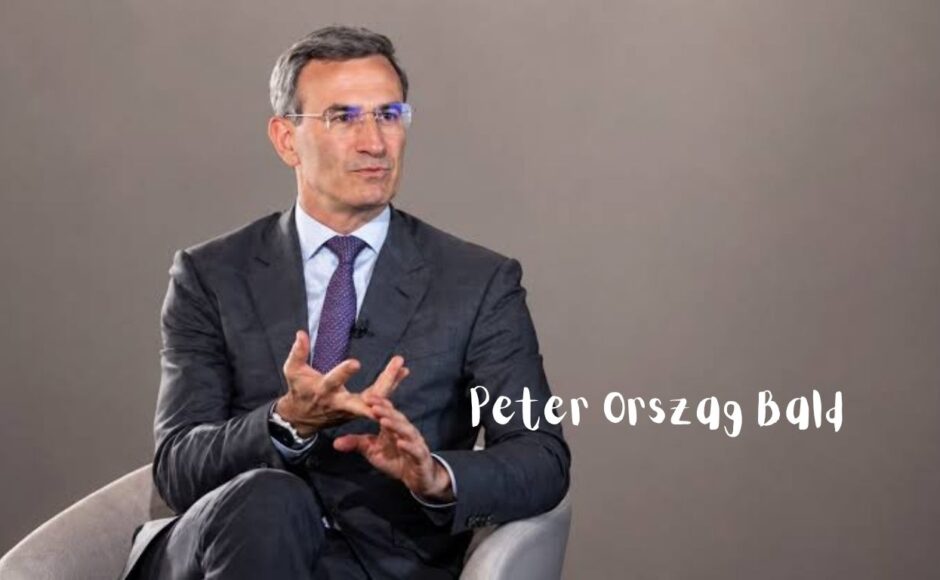
Peter Orszag Bald’s Personal, Professional, and Life Story

The phrase “Peter Orszag bald” has gained attention among people searching for information about the well-known economist and financial leader. Many people first notice Peter Orszag because of his distinctive bald or closely shaved appearance during public appearances, interviews, and professional events. However, his story goes far beyond his appearance.

Peter Orszag has built an impressive career at the intersection of economics, government policy, and global finance. Over several decades, he has worked on some of the most important economic issues in the United States, including government budgets, healthcare costs, financial planning, and economic strategy.

He is recognised for his roles as Director of the Congressional Budget Office (CBO), Director of the Office of Management and Budget (OMB) under President Barack Obama, and later as a senior executive at Lazard.

By 2026, Orszag had reached the top level of the financial industry, serving as CEO and Chairman of Lazard, one of the world’s leading financial advisory firms.

While searches about his appearance may introduce people to his name, his real story is about academic success, public service, financial leadership, and his influence on economic discussions worldwide.

Early Life and Background of Peter Orszag

Peter Orszag was born on 16 December 1968 in Boston, Massachusetts. He was raised in a family where education and intellectual curiosity played an important role.

His father was a mathematics professor, and his mother worked in education. Growing up in an environment focused on learning and analysis helped shape his interest in numbers, research, and problem-solving.

From an early age, Orszag developed a strong interest in understanding how systems work. This curiosity later led him towards economics and public policy, areas where he could study major challenges and develop practical solutions.

Unlike many public figures who become known through politics or entertainment, Orszag built his reputation through knowledge and research. His career developed around his ability to understand complex economic issues and explain them in a practical way.

Although he has spent years working in high-profile roles, Peter Orszag has kept much of his personal background private. His public identity has mainly been connected to his professional achievements rather than his personal life.

Education and the Foundation of His Career

Peter Orszag’s education played a major role in shaping his future success.

He studied economics at Princeton University, where he developed advanced skills in economic research, financial analysis, and policy thinking. His time at Princeton helped him understand how economic decisions affect governments, businesses, and communities.

After completing his undergraduate studies, Orszag continued his education at the London School of Economics and Political Science. The institution is widely recognised for its work in economics, politics, and social sciences.

His studies expanded his understanding of public finance, economic modelling, and government decision-making. This strong academic background gave him the tools needed to work on complicated economic challenges.

Rather than choosing a career focused on elections or traditional politics, Orszag built his professional path around research and economic expertise. His ability to turn complex information into practical advice became one of the main reasons he gained recognition.

Early Career in Economics and Policy Research

Before becoming a major figure in government and finance, Peter Orszag spent years developing his expertise through economic research and advisory work.

His early career focused on important issues such as healthcare expenses, government spending, retirement systems, and long-term economic planning.

He became known for using research and data to understand problems instead of relying only on political opinions. This approach helped him gain respect among economists, policymakers, and business leaders.

One of his strongest abilities was explaining complicated economic topics in a simple and useful way. This skill allowed him to connect academic research with real-world decisions.

His work showed that economic experts can have a major influence on society by providing knowledge and analysis, even without being elected officials.

Over time, his reputation as a trusted economic adviser opened the door to some of the most important roles in the US government.

Becoming Director of the Congressional Budget Office

In 2007, Peter Orszag reached an important milestone when he was appointed Director of the Congressional Budget Office.

The Congressional Budget Office is responsible for providing independent economic information to the US Congress. It analyses proposed legislation, studies government spending, and estimates the financial effects of policies.

Orszag took leadership of the organisation during a challenging time. His period at the CBO came during the global financial crisis, when the United States faced major economic uncertainty.

During his leadership, the organisation worked on important topics including:

  • Government spending and budget planning
  • National debt concerns
  • Healthcare costs
  • Economic recovery strategies

The CBO continued to be respected for providing independent and non-partisan economic analysis. Its reports helped lawmakers, journalists, researchers, and financial professionals understand complicated economic issues.

Orszag’s time at the CBO strengthened his reputation as a serious economic thinker and capable leader.

Peter Orszag’s Role in the Obama Administration

After his work at the Congressional Budget Office, Peter Orszag joined the Obama administration in 2009 as Director of the Office of Management and Budget.

This was one of the most important financial roles in the US government. The OMB plays a key part in preparing the federal budget, reviewing government programmes, and analysing the financial impact of policy decisions.

Orszag entered the role during a difficult economic period. The United States was recovering from the global financial crisis, facing unemployment challenges, and debating major issues around government spending and healthcare reform.

His expertise in healthcare economics made him an important contributor to discussions about improving the healthcare system and managing rising costs.

As OMB Director, Orszag worked on:

  • Budget planning
  • Federal spending reviews
  • Economic policy analysis
  • Healthcare cost discussions

He became recognised for his ability to communicate complex financial issues clearly. His role required him to explain difficult economic decisions to government officials and the wider public.

After serving in the administration, he stepped away from government work in 2010 and moved towards the private sector.

Moving from Government to Global Finance

After leaving Washington, Peter Orszag began a new chapter in his career by entering the financial sector.

His experience in government gave him valuable knowledge about how policies, regulations, and economic changes affect businesses and markets.

In the private sector, he worked with companies, investors, and organisations that needed advice on financial strategy and economic challenges.

His government background helped him provide a wider perspective. He understood not only financial markets but also the policy decisions that influence them.

This combination of economic knowledge and practical experience made him a valuable figure in financial advisory work.

His career transition showed that expertise developed through public service can also create significant opportunities in global business.

Joining Lazard and Becoming a Global Finance Leader

In 2016, Peter Orszag joined Lazard, beginning an important new phase of his professional journey.

Lazard is one of the world’s most respected financial advisory companies, helping businesses, governments, and institutions with major financial decisions. The firm provides services in areas such as mergers and acquisitions, restructuring, asset management, and strategic advice.

At Lazard, Orszag used his experience in economics, government policy, and financial markets to help clients understand complex challenges. His ability to connect economic trends with business decisions became one of his biggest strengths.

His background in government gave him a different perspective compared with many traditional finance professionals. He understood how changes in regulations, government policies, and global economic conditions could affect companies and investment decisions.

Over time, Orszag took on more senior responsibilities within Lazard. His leadership skills, analytical approach, and understanding of global markets helped him rise through the organisation.

Eventually, he became Chief Executive Officer and later Chairman of Lazard. This achievement marked the highest point of a career that began with economic research and public policy before moving into global finance.

His journey reflects how strong expertise and adaptability can create opportunities across different industries.

Why People Search for Peter Orszag Bald

The search term “Peter Orszag bald” has become popular because many people are curious about his appearance.

During public appearances, interviews, and professional events, Orszag is often seen with a bald or closely shaved head. This has made his appearance easily recognisable among viewers who follow economic and financial discussions.

However, his hairstyle is only a small part of his public identity. Peter Orszag has not publicly shared details about why he keeps this hairstyle or whether it is connected to natural hair loss or personal choice.

There is no confirmed public information about the reason behind his appearance.

While online searches may begin with curiosity about his looks, his long-term reputation has been built through his work in economics, government leadership, and financial strategy.

His career demonstrates that appearance may attract attention, but knowledge, experience, and achievements create lasting recognition.

Marriage, Wife, and Family Life

Peter Orszag is married to Bianna Golodryga, a respected journalist and television personality known for covering business, politics, and international affairs.

Both Orszag and Golodryga have built successful careers in fields that involve public attention. However, they have chosen to keep much of their personal life away from the media.

Orszag has always maintained a private approach when discussing family matters. Unlike some public figures who frequently share personal details, he prefers to focus attention on his professional work.

This privacy has been a consistent part of his public image. Even while working in some of the most influential positions in government and finance, he has allowed his expertise and professional contributions to define him.

Balancing a demanding career with family life can be challenging, especially for individuals working in high-pressure industries. Orszag’s approach reflects the importance of maintaining boundaries between professional responsibilities and personal matters.

Peter Orszag’s Net Worth and Career Earnings

The exact net worth of Peter Orszag has not been officially revealed.

Some websites provide estimated figures, but these numbers are not based on publicly confirmed financial information. Therefore, such estimates should be viewed carefully.

What is clear is that Orszag has achieved significant professional success through a career that includes government leadership, economic consulting, and executive roles in global finance.

His sources of income have included:

  • Senior government positions
  • Economic research and advisory work
  • Consulting opportunities
  • Executive compensation from Lazard
  • Professional speaking and financial expertise

His career path shows a steady progression from academic economics to government leadership and eventually to one of the highest positions in international finance.

Peter Orszag’s Current Role in 2026

As of 2026, Peter Orszag serves as CEO and Chairman of Lazard.

In this position, he leads the company’s global operations and helps guide its approach during a period of major changes in the financial industry.

Businesses and investors today face a wide range of challenges, including:

  • Changing global markets
  • Advances in artificial intelligence and technology
  • Economic uncertainty
  • Geopolitical developments
  • New business models

Orszag’s experience in both government and finance allows him to understand these challenges from multiple viewpoints.

His work continues to focus on areas such as:

  • Global economic trends
  • Financial markets
  • Corporate strategy
  • Mergers and acquisitions
  • Government regulations
  • Long-term economic growth

Through interviews, conferences, and industry discussions, he continues to contribute ideas about the future of finance and the global economy.

Professional Reputation and Economic Influence

Throughout his career, Peter Orszag has developed a reputation as an economist, strategist, and financial leader.

His approach has always focused on:

  • Research-based decisions
  • Understanding economic systems
  • Long-term planning
  • Data analysis
  • Practical solutions

Many professionals recognise his ability to break down complicated economic topics and make them easier to understand.

His work on healthcare costs, government budgets, and economic policy has contributed to important discussions about financial stability and national planning.

However, like many influential figures in economics, his views have also received criticism. Some people have debated his opinions on government spending, healthcare reform, and economic policies.

Different opinions are common among economists because economic decisions often involve difficult choices and competing priorities.

Regardless of these debates, Peter Orszag’s influence in economic and financial circles remains widely recognised.

Frequently Asked Questions About Peter Orszag

Is Peter Orszag bald?

Yes, Peter Orszag is known for his bald or closely shaved appearance. However, he has not publicly explained the reason behind his hairstyle.

How old is Peter Orszag?

Peter Orszag was born on 16 December 1968. In 2026, he is 57 years old.

What is Peter Orszag famous for?

Peter Orszag is best known for his work as:

  • Director of the Congressional Budget Office
  • Director of the Office of Management and Budget during the Obama administration
  • CEO and Chairman of Lazard

He is recognised for his expertise in economics, public policy, and financial leadership.

Who is Peter Orszag’s wife?

Peter Orszag is married to Bianna Golodryga, a journalist and television personality. The couple keeps their family life private.

What is Peter Orszag’s net worth?

There is no officially confirmed figure for Peter Orszag’s net worth. Online estimates have not been verified through public financial records.

What does Peter Orszag do now?

Peter Orszag currently serves as CEO and Chairman of Lazard, where he manages the firm’s global financial advisory activities.

Conclusion: The Real Story Behind Peter Orszag

Many people discover Peter Orszag through searches about his appearance, especially the phrase “Peter Orszag bald”. However, his life story is about much more than his looks.

From his early education and economic research to leading major government organisations and becoming CEO and Chairman of Lazard, Orszag has created a remarkable career based on knowledge and leadership.

His work has influenced discussions about government budgets, healthcare economics, financial markets, and global business strategy.

Although his appearance may make him recognisable, his true reputation comes from his ability to understand complex issues and provide thoughtful solutions.

Peter Orszag’s journey shows how expertise, education, and continuous learning can help shape important decisions in both government and business. His career remains an example of how economic knowledge can create a lasting impact beyond traditional roles.

Read More →


Share:

Derek Mathewson’s Bangers & Cash Star Profile

Who Is Derek Mathewson?

Derek Mathewson is a well-known British classic car expert, auctioneer, and television personality who has become a familiar face among automotive enthusiasts. He is best recognised for his appearance in the popular documentary series Bangers & Cash, where he shares his knowledge of classic vehicles, restoration projects, and collector car auctions.

With decades of experience in the motor trade, Derek has built a respected reputation for his honest valuations, detailed automotive knowledge, and genuine love for historic vehicles. His friendly approach and ability to explain the stories behind classic cars have made him a favourite among collectors and viewers across the UK.

Early Life and Love for Classic Vehicles

Derek Mathewson developed a passion for cars from an early age. Growing up in Yorkshire, he became fascinated by Britain’s long motoring history and the unique stories connected to older vehicles.

For Derek, classic cars are not simply machines. Each vehicle represents a piece of history, carrying memories of previous owners, journeys, and important moments. This appreciation for the character and craftsmanship of older cars inspired him to build a career dedicated to preserving automotive heritage.

His understanding of classic vehicles comes from years of hands-on experience, allowing him to recognise the value, condition, and history behind every car that comes through his auction house.

Building Mathewsons Classic Cars

Before becoming a television personality, Derek created Mathewsons Classic Cars, a family-run auction business specialising in classic vehicles, motorcycles, vintage commercial vehicles, and motoring memorabilia.

Over the years, Mathewsons has become one of the UK’s leading names in classic vehicle auctions. The business attracts collectors, enthusiasts, and everyday owners who want to buy or sell vehicles with history and character.

From affordable restoration projects to rare collector models, Mathewsons handles a wide range of vehicles. The company’s success comes from Derek’s expert knowledge, fair approach, and commitment to providing honest valuations.

Becoming Famous Through Bangers & Cash

Derek Mathewson gained wider recognition through Bangers & Cash, a documentary series that follows the work of Mathewsons Classic Cars.

The programme offers viewers a behind-the-scenes look at how classic vehicles are discovered, valued, prepared, and sold through auction. Unlike many car shows that focus only on luxury vehicles and expensive collections, Bangers & Cash celebrates cars of all types.

The series features everything from family cars and restoration projects to unusual classics and historic motorcycles. Viewers enjoy the emotional stories behind each vehicle and Derek’s excitement when uncovering their past.

His calm personality, practical advice, and genuine enthusiasm have helped the show become popular among both car experts and people new to the classic car world.

Derek Mathewson’s Role in Bangers & Cash

As one of the main figures on Bangers & Cash, Derek plays an important role throughout the auction process. His responsibilities include examining vehicles, providing valuations, guiding sellers, and sharing the history behind different cars.

His work involves:

  • Assessing classic vehicles and their condition
  • Understanding market values
  • Advising owners and collectors
  • Managing auction processes
  • Sharing interesting stories connected to historic vehicles

Derek’s ability to make complex automotive details easy to understand has helped introduce classic car collecting to a much wider audience.

A Family Business Built on Trust

One of the key reasons behind the success of Mathewsons and Bangers & Cash is the family-focused approach. Derek works alongside members of his family, creating an environment built on trust, experience, and shared passion.

The family-run nature of the business gives the auction house a personal touch. Buyers and sellers appreciate the honest advice and friendly atmosphere that has become part of the Mathewsons identity.

This combination of professional knowledge and family values has helped the company build strong relationships within the classic vehicle community.

Derek Mathewson’s Expertise in Classic Car Auctions

Throughout his career, Derek has developed extensive knowledge of different areas of the automotive world, including:

  • Vintage British cars
  • Classic sports vehicles
  • Historic motorcycles
  • Vintage commercial vehicles
  • Restoration projects
  • Automotive memorabilia

Whether he is handling a rare collector’s item or a much-loved family car, Derek gives every vehicle the same level of attention and respect. He understands that every classic car has its own history and deserves to be appreciated.

Personal Life and Privacy

Although Derek Mathewson is well known on television, he prefers to keep much of his personal life private. Public attention has mainly focused on his professional career, his work at Mathewsons, and his passion for classic vehicles.

His ability to maintain privacy while building a successful public career has helped him maintain a respected image within the automotive industry.

Career Achievements

During his career, Derek Mathewson has achieved several important milestones, including:

  • Creating a successful family-run classic car auction business
  • Becoming one of Britain’s most recognised classic vehicle auctioneers
  • Introducing classic car auctions to television audiences
  • Helping preserve important parts of motoring history
  • Inspiring new generations of classic car enthusiasts

His contribution to the industry has helped people understand that classic vehicles are valuable pieces of cultural history.

Why Derek Mathewson Is So Respected

Derek Mathewson’s success comes from his years of experience, honest approach, and genuine passion for classic vehicles. He sees cars as more than investments. For him, they represent craftsmanship, memories, and stories from the past.

Through Bangers & Cash, Derek has shown that every vehicle has a unique journey. His dedication to preserving these stories has made him one of the most respected figures in Britain’s classic car community.

Frequently Asked Questions

Who is Derek Mathewson?

Derek Mathewson is a British classic car auctioneer, television personality, and the founder of Mathewsons Classic Cars.

Why is Derek Mathewson famous?

He is best known for appearing in Bangers & Cash, a documentary series about his family-run classic vehicle auction business.

What does Derek Mathewson do?

Derek specialises in valuing, buying, selling, and auctioning classic cars, motorcycles, vintage vehicles, and motoring memorabilia.

Where is Mathewsons Classic Cars located?

Mathewsons Classic Cars is based in North Yorkshire, England, and specialises in classic vehicle auctions.

Is Derek Mathewson still involved with Mathewsons?

Yes, Derek continues to be closely connected with Mathewsons and remains an important part of the family business.

Conclusion

Derek Mathewson has become one of Britain’s most recognised names in the classic car industry. Through his work with Mathewsons Classic Cars and his role on Bangers & Cash, he has introduced millions of viewers to the fascinating world of historic vehicles.

His knowledge, honesty, and passion for preserving automotive history continue to inspire collectors and enthusiasts. Derek’s career shows that classic cars are not just vehicles. They are stories from the past that deserve to be remembered and protected.

Read More →
Share:

Mark Hines: Architect and Husband of Lucy Worsley

When exploring the world of British conservation architecture, Mark Hines stands out as a professional who has dedicated his career to protecting and reimagining historic spaces. Unlike architects who become widely recognised through public appearances, Hines has built his reputation through careful restoration, thoughtful design, and a deep understanding of Britain’s architectural past.

For Mark Hines, historic buildings are not simply structures from another era. They are living parts of communities that can continue to serve modern needs when treated with care and respect. His work represents a connection between tradition and innovation, showing how architecture can honour history while adapting to the future.

Alongside his architectural achievements, Hines is also known publicly as the husband of British historian and broadcaster Lucy Worsley. However, his professional identity extends far beyond this association. Over several decades, he has contributed to some of Britain’s most significant conservation projects, allowing his architectural work to define his career.

This article explores Mark Hines’s early life, professional journey, architectural beliefs, important projects, and personal life, offering a closer look at the architect behind some of Britain’s most carefully considered heritage transformations.

Early Years and Introduction to Architecture

Mark Andrew Hines was born in the United Kingdom in June 1967. Information about his early childhood, family background, and personal upbringing remains limited, as he has always maintained a private approach to his personal life.

However, his professional path reflects a strong early interest in historic buildings, conservation, and traditional construction methods. His career developed during a period when British architecture was experiencing major debates about the future of older buildings.

During the 1980s and 1990s, architects faced an important question: should cities focus on creating entirely new developments, or should existing historic buildings be carefully preserved and adapted?

Hines became closely associated with the second approach. Rather than viewing historic buildings as outdated, he saw them as valuable resources that could be improved while maintaining their original identity.

His architectural philosophy developed around the idea that preservation and progress could exist together. Buildings could be modernised without losing the qualities that made them historically important.

The Influence of the Lethaby Scholarship

An important moment in Mark Hines’s early career came when he received the Lethaby Scholarship from the Society for the Protection of Ancient Buildings (SPAB).

Founded by designer and writer William Morris, SPAB is one of the UK’s leading organisations dedicated to protecting historic buildings. The organisation promotes sensitive repair methods and encourages architects to understand the original character of older structures before making changes.

Through the scholarship, Hines gained valuable experience in traditional craftsmanship, conservation methods, and responsible approaches to restoration.

This experience became a foundation for his future work. It strengthened his belief that historic buildings should not be preserved as frozen monuments but carefully adapted so they can continue to have a purpose.

His connection with SPAB also became personally important. It was through this organisation that he later met Lucy Worsley during the early stages of her own heritage career. Their shared interest in architecture, history, and conservation created a connection that eventually developed into a long-term relationship.

Building Experience at MJP Architects

After completing his architectural training, Mark Hines developed his professional experience at MacCormac Jamieson Prichard (MJP Architects), a respected British architectural practice.

MJP Architects was known for creating buildings that combined modern design with sensitivity towards historical surroundings. This made it a suitable environment for Hines to develop his conservation-focused approach.

During his time at the practice, Hines worked on a variety of cultural and civic projects. His responsibilities involved finding solutions where modern requirements needed to work alongside existing architectural character.

He eventually became a Director at MJP Architects, contributing his expertise to projects that required careful planning, technical knowledge, and an understanding of heritage value.

His work during this period established the principles that would continue throughout his career: respect the past, understand the building’s purpose, and create designs that allow historic spaces to remain relevant.

The Transformation of BBC Broadcasting House

The redevelopment of BBC Broadcasting House became one of the most important achievements of Mark Hines’s career.

Located in London, Broadcasting House has a special place in British cultural history. Opened in 1932, the Art Deco building became the headquarters of the BBC and played a central role in the development of British broadcasting.

Over time, advances in technology created new challenges. The building needed modern studios, updated digital systems, and improved facilities to support contemporary broadcasting.

However, because of its Grade II* listed status, any changes needed to protect its historic importance.

This created a complex challenge: how could one of Britain’s most recognisable historic buildings be modernised without damaging its original character?

As Project Director at MJP Architects, Mark Hines played a key role in answering this question.

The redevelopment carefully combined restoration with modern design. A new extension, known as the John Peel Wing, was added to the original building and connected through a striking glass atrium.

Instead of creating a conflict between traditional architecture and modern additions, the project created a balanced relationship between both elements.

The result demonstrated that historic buildings can successfully evolve while keeping the qualities that make them special.

A Conservation Philosophy Based on Respect and Adaptation

The transformation of BBC Broadcasting House reflected the core principles that have guided Mark Hines throughout his architectural career.

Rather than approaching restoration as a process of simply repairing old structures, Hines believes that architects must first understand what makes a building important. Every historic building has its own character, materials, and story, and these elements should guide any future changes.

His approach focuses on protecting original features while introducing modern improvements where necessary. Instead of removing historic details to make way for new functions, he believes buildings should be carefully adapted so they can continue serving future generations.

This philosophy allows architecture to evolve naturally. Historic buildings are not treated as outdated spaces but as places that can continue to grow and remain useful.

Combining Modern Technology with Historic Design

One of the biggest challenges in conservation architecture is introducing modern facilities without affecting the original appearance of a building.

Mark Hines has consistently shown that technology can be integrated successfully when it is carefully planned. In projects such as Broadcasting House, essential systems including digital equipment, lighting, ventilation, and technical services were incorporated without damaging the building’s historic qualities.

This balance between old and new has become a defining feature of his work.

For Hines, successful conservation does not mean avoiding change. It means making changes that respect the building’s identity while improving its ability to function in the modern world.

The Importance of Sustainable Architecture

Long before sustainability became one of the biggest discussions in the construction industry, Mark Hines recognised the environmental value of reusing existing buildings.

He has supported the idea that demolition should not be the first solution when a historic building requires improvement. Existing structures already contain valuable materials, energy, and craftsmanship, and preserving them can significantly reduce environmental impact.

His approach reflects the growing movement towards sustainable architecture, where renovation and adaptation are considered important tools for reducing waste and carbon emissions.

For Hines, conservation and sustainability are closely connected. Protecting historic buildings is not only about preserving cultural history but also about making responsible choices for the environment.

Sharing Knowledge Through Writing

In 2008, Mark Hines published The Story of Broadcasting House: Home of the BBC, a book that explores the history and redevelopment of one of Britain’s most recognisable buildings.

The publication provides insight into the architectural challenges involved in transforming a historic landmark while maintaining its original importance.

Through the book, Hines shared his knowledge of conservation and adaptive reuse with architects, students, and anyone interested in Britain’s built heritage.

The work reflects his wider belief that conservation should not simply focus on keeping buildings unchanged. Instead, historic spaces should be carefully adapted so they can continue to have meaning and purpose.

Creating Mark Hines Architects

After many years at MJP Architects, Mark Hines established his own architectural practice, Mark Hines Architects, in 2006.

Based in Clerkenwell, London, the practice focused on projects that combined traditional architectural understanding with contemporary requirements.

The firm developed a reputation for carefully designed residential projects, refurbishments, and sensitive alterations. Rather than creating buildings that ignored their surroundings, the practice focused on designs that complemented existing architecture.

Hines’s work avoided unnecessary imitation of historic styles. Instead, he used traditional principles such as proportion, craftsmanship, and quality materials to create spaces suitable for modern life.

A Design Approach Focused on Continuity

A major theme throughout Mark Hines’s independent career was the idea of continuity.

He believed architecture should feel connected to its surroundings and history. Instead of creating dramatic contrasts between old and new, he preferred designs where additions appeared as natural developments of existing buildings.

This approach allowed historic structures to maintain their character while gaining improved functionality.

Materials were also central to his design philosophy. Hines often worked with materials such as brick, stone, timber, and glass because they offer durability and age naturally over time.

His focus was not on creating temporary visual impact but on designing buildings that would remain valuable for decades.

Designing Homes and Spaces for Everyday Life

Although heritage conservation was an important part of his career, Mark Hines also focused strongly on creating comfortable spaces for people.

His projects considered factors such as natural light, practical layouts, carefully selected materials, and a strong connection between indoor and outdoor environments.

He believed architecture should improve everyday experiences rather than only create impressive appearances.

This people-focused approach helped define the character of his work, combining technical knowledge with attention to human needs.

The Work of Mark Hines Architects

During its years of operation, Mark Hines Architects completed a variety of residential and restoration projects.

The practice became known for improving existing properties, creating thoughtful extensions, and developing new homes inspired by traditional architectural principles.

Although the firm was not focused on large commercial developments, its work gained appreciation for its attention to detail and careful understanding of context.

The practice demonstrated that smaller-scale projects can make meaningful contributions to architecture when they are approached with skill and sensitivity.

Closing of the Architectural Practice

After nearly twenty years, Mark Hines Architects Ltd. was officially dissolved in 2024.

The closure of the company does not necessarily suggest that Hines has stepped away from architecture completely. Many experienced professionals continue working through independent projects, advisory roles, and collaborations after closing a formal practice.

His experience in conservation and sustainable design continues to hold value within the architectural profession.

Supporting the Future of Heritage Conservation

As the conversation around climate change and sustainable construction continues, Mark Hines’s ideas have become increasingly relevant.

His career has consistently supported the principle that existing buildings should be protected, improved, and reused whenever possible.

Rather than seeing heritage buildings as obstacles to development, Hines believes they can provide opportunities for innovative solutions.

This approach has influenced wider discussions about how Britain can balance modern needs with the protection of its architectural identity.

The Richmond House Conservation Debate

One of Mark Hines’s most notable contributions to heritage discussions involved the future of Richmond House, a Grade II* listed building located in Whitehall, London.

When proposals were introduced to remove significant parts of the building as part of wider redevelopment plans connected with the restoration of the Palace of Westminster, Hines joined other conservation professionals in questioning whether demolition was the right approach.

He argued that careful refurbishment and sensitive adaptation could provide the modern facilities required while protecting the building’s historical and architectural value.

His position reflected a principle that has guided much of his career: historic buildings should not be discarded simply because they need improvement. With creative thinking and careful planning, older structures can continue to serve new purposes.

The debate highlighted wider issues within architecture, including the importance of considering environmental impact alongside heritage protection. For Hines, preserving existing buildings is not only about respecting history but also about making more sustainable decisions.

A Voice in Heritage and Sustainability Discussions

Alongside his architectural practice, Mark Hines has contributed to professional conversations about conservation, restoration, and sustainable design.

Through talks, events, and industry discussions, he has shared his experience of working with historic buildings and encouraged architects to consider refurbishment before demolition.

His involvement with organisations such as the Society for the Protection of Ancient Buildings (SPAB) and the Twentieth Century Society reflects his continued interest in protecting important architectural heritage.

Rather than viewing conservation as something that limits creativity, Hines believes it creates opportunities for architects to develop thoughtful and innovative solutions.

His work demonstrates that historic preservation and modern architecture can support each other when approached with understanding and skill.

Mark Hines’s Personal Life

While Mark Hines has achieved recognition within the architectural profession, many people outside the industry know him through his relationship with British historian and broadcaster Lucy Worsley.

Despite this public connection, Hines has always maintained a private lifestyle. Unlike many people connected to television personalities, he has chosen to stay away from media attention and allow his professional work to represent him.

His preference for privacy reflects the same qualities often associated with his architecture: careful, thoughtful, and focused on substance rather than appearance.

How Mark Hines Met Lucy Worsley

Mark Hines and Lucy Worsley first became connected through their shared interest in Britain’s history and architectural heritage.

Their paths crossed through the Society for the Protection of Ancient Buildings, an organisation that played an important role in both of their professional journeys.

Hines had received the Lethaby Scholarship from SPAB early in his career, while Worsley also had involvement with heritage conservation during the beginning of her own career.

Their mutual appreciation for historic buildings, research, and preservation created a strong connection between them.

Over time, their professional friendship developed into a personal relationship built around shared interests and values.

Marriage and Life Away From the Spotlight

Mark Hines and Lucy Worsley married in 2011.

Although Lucy Worsley is widely recognised for her television documentaries, books, and public history work, the couple have chosen to keep their personal relationship mostly private.

They rarely discuss their private life publicly and prefer to focus attention on their professional achievements.

Worsley has occasionally spoken warmly about Hines, describing him as someone who prefers working behind the scenes rather than seeking public attention.

Their relationship reflects a shared appreciation for history, culture, and creativity, while maintaining a clear separation between their personal and professional lives.

A Shared Commitment to British Heritage

Although Mark Hines and Lucy Worsley work in different fields, both have dedicated their careers to preserving Britain’s cultural story.

Lucy Worsley explores history through books, documentaries, and public engagement, helping audiences understand the people and events that shaped Britain.

Mark Hines protects history through architecture, ensuring that important buildings continue to exist and serve communities.

Their careers show two different but equally valuable approaches to heritage preservation.

One uses storytelling, while the other uses design and restoration. Together, they represent a commitment to keeping Britain’s past meaningful for future generations.

The Principles Behind Mark Hines’s Architecture

Several important ideas define Mark Hines’s approach to design and conservation.

Understanding the Importance of Context

Hines believes every building should respond to its surroundings.

Rather than creating architecture that demands attention, he focuses on designs that respect local character, materials, and history.

His projects often work quietly within their environment, strengthening the identity of a place instead of competing with it.

This approach creates buildings that feel connected to their surroundings and stand the test of time.

Respecting Age and Historical Character

A key part of Hines’s philosophy is accepting that buildings naturally change over time.

He believes signs of age, traditional materials, and historic details add value rather than reducing a building’s quality.

Instead of removing every mark of the past, he supports preserving the elements that tell a building’s story.

This understanding allows historic buildings to maintain authenticity while adapting for modern use.

Supporting Traditional Craftsmanship

Craftsmanship has always been an important part of Mark Hines’s architectural thinking.

He values the skills of specialist craftspeople who work with traditional materials and methods.

Whether restoring stonework, repairing timber details, or creating carefully designed finishes, skilled craftsmanship helps maintain the quality and character of buildings.

This respect for traditional skills connects architecture with wider creative fields where heritage techniques continue to influence modern design.

Creating Architecture That Lasts

One of the strongest features of Hines’s work is its focus on longevity.

Rather than designing buildings based on short-lived trends, he believes architecture should be created with future generations in mind.

Durable materials, thoughtful planning, and careful detailing allow buildings to remain useful and attractive over time.

His approach shows that good architecture is not only about how a building looks when it is completed but also how successfully it continues to serve people years later.

Professional Reputation and Influence

Within the architectural community, Mark Hines is respected for his knowledge, careful approach, and commitment to protecting Britain’s built heritage.

Rather than becoming known through publicity or media attention, he has built his reputation through the quality of his projects and the consistency of his design principles.

Throughout his career, Hines has shown a strong ability to balance different demands. Historic buildings often require protection, but they also need to meet modern expectations for comfort, accessibility, and functionality. His work demonstrates how these challenges can be addressed through thoughtful planning and creative solutions.

Colleagues and professionals recognise him for his detailed approach, patience, and ability to understand the unique qualities of each building. His work reflects a belief that successful architecture comes from research, collaboration, and respect for the existing environment.

The Architect Behind the Work

Despite his achievements, Mark Hines has maintained a relatively low public profile.

Those who have worked with him often describe him as a thoughtful and measured professional who prefers careful analysis over quick decisions. He approaches architectural challenges by understanding the history, purpose, and future needs of a building before suggesting solutions.

His personality closely reflects his architectural style. Like his projects, he is often associated with qualities such as balance, patience, and attention to detail.

Outside architecture, Hines has a strong interest in subjects closely connected to his profession, including architectural history, craftsmanship, design, and cultural heritage.

Although his work has influenced discussions around conservation and sustainability, he has consistently chosen collaboration and quality over personal recognition.

A Lasting Contribution to Reuse Architecture

One of Mark Hines’s most important contributions to British architecture is his support for adaptive reuse.

For many years, he has promoted the idea that existing buildings should be improved rather than automatically replaced.

This approach has become increasingly important as architects and planners look for ways to reduce construction waste and lower environmental impact.

By adapting older buildings, communities can protect historical identity while creating spaces that meet present-day needs.

Hines’s career demonstrates that heritage buildings are not simply reminders of the past. They can continue to play an active role in modern society when approached with imagination and care.

The Growing Importance of Sustainable Heritage

Today, sustainability is one of the biggest challenges facing the architecture industry. Many of the ideas that Mark Hines supported throughout his career have become central to current conversations about responsible design.

His belief in protecting existing buildings connects with a wider movement towards sustainable heritage, where preservation, craftsmanship, and environmental responsibility work together.

Rather than treating conservation as separate from sustainability, Hines has shown that the two ideas can support each other.

By reducing unnecessary demolition and making better use of existing structures, architecture can become more environmentally responsible while maintaining cultural value.

This way of thinking is also reflected in other creative fields, including fashion and design, where sustainable heritage fashion celebrates traditional skills, responsible production, and long-lasting craftsmanship.

Education and Sharing Architectural Knowledge

Mark Hines’s influence extends beyond the buildings he has worked on.

Through his writing, professional discussions, and involvement in heritage organisations, he has helped share knowledge about conservation and responsible design.

His book about Broadcasting House provides valuable insight into the challenges of restoring a historic landmark while preparing it for modern use.

By explaining the process behind conservation projects, Hines has helped students, architects, and the wider public understand why protecting historic buildings matters.

His work encourages future professionals to see older structures as opportunities for creativity rather than limitations.

Key Lessons From Mark Hines’s Career

Mark Hines’s professional journey offers several important lessons about architecture and preservation.

Historic Buildings Can Have a Future

Older buildings do not need to become forgotten spaces. With careful planning, they can continue to serve communities while maintaining their historical importance.

Conservation Requires Creativity

Preserving a building does not mean avoiding change. The best conservation projects find ways to introduce modern improvements while respecting original character.

Sustainability Begins With Reuse

One of the most effective ways to reduce environmental impact is to make better use of existing buildings rather than replacing them unnecessarily.

Good Design Focuses on Longevity

Architecture should not only respond to current trends. Buildings should be created with future generations in mind.

Quiet Work Can Create Lasting Impact

Although Mark Hines has remained outside the spotlight, his influence can be seen through important projects, professional discussions, and changing attitudes towards conservation.

Mark Hines’s Place in British Architectural History

Mark Hines may not be a household name, but within the world of conservation architecture, his contribution is significant.

His career represents a careful balance between respecting history and embracing modern requirements.

From the transformation of BBC Broadcasting House to his independent architectural practice, Hines has consistently demonstrated that historic buildings can remain relevant in a changing world.

His work reflects a broader shift in architecture towards restoration, reuse, and sustainability. As the industry continues to focus on reducing environmental impact, the principles he has supported for decades are becoming increasingly important.

Conclusion: A Career Built on Respect for History

Mark Hines has created a lasting legacy through his dedication to conservation-led architecture. His career shows that protecting historic buildings and creating modern spaces are not opposite goals. Instead, both can work together when guided by knowledge, care, and imagination.

Through projects such as the redevelopment of BBC Broadcasting House, his work with Mark Hines Architects, and his continued support for sustainable reuse, he has helped demonstrate the value of thoughtful restoration.

Although he has remained largely away from public attention, his influence within British architecture is clear. His approach has helped shape conversations around heritage protection, adaptive reuse, and sustainable design.

Together with Lucy Worsley, who shares Britain’s history through storytelling and research, Mark Hines contributes to preserving the nation’s cultural identity in his own way. While she protects history through words, he protects it through buildings.

His career serves as a reminder that architecture is not only about creating new structures. It is also about understanding, protecting, and giving new life to the places that already hold meaning.

Read More →
Share: